Introduction
Smartphones have become an important part of everyday life. People use them for communication, entertainment, photography, online shopping, work, education, banking, navigation, and many other activities.
With new smartphone models arriving regularly, it can be difficult to understand which features are actually useful. Some specifications may look impressive on paper, but their importance depends on how you use your phone.
Whether you are buying a budget smartphone, a mid-range device, or a premium phone, knowing which features to look for can help you make a more informed decision.
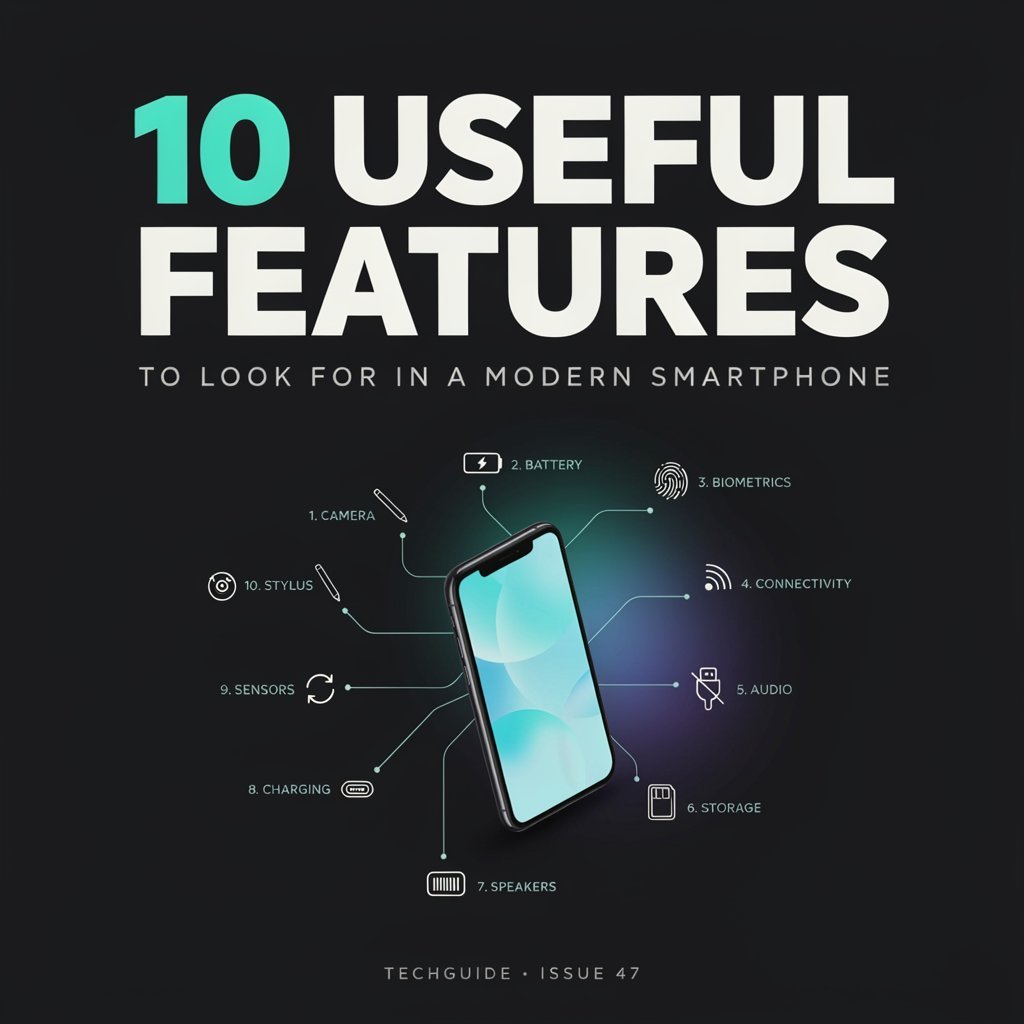
Here are 10 useful features to consider when choosing a modern smartphone.
1. A High-Quality Display
The display is one of the first things you interact with on a smartphone.
A good display can make reading, browsing, watching videos, viewing photos, and using applications more comfortable.
When comparing displays, consider:
- Screen size
- Resolution
- Brightness
- Color reproduction
- Viewing angles
- Refresh rate
- Display protection
A higher refresh rate can make scrolling and animations appear smoother. Good brightness is particularly useful when using a phone outdoors.
You do not necessarily need the most expensive display. The important thing is finding a display that suits your daily activities.
2. Reliable Battery Life
Battery life is one of the most practical smartphone features.
A phone with good battery performance can reduce the need to constantly search for a charger during the day.
Battery performance depends on several factors, including:
- Battery capacity
- Processor efficiency
- Display technology
- Screen brightness
- Network connection
- Applications running in the background
- Software optimization
When choosing a phone, do not look only at the battery capacity. Reviews and real-world testing can provide additional information about how long a device lasts under normal use.
3. Fast and Efficient Performance
A modern smartphone should be able to handle your everyday applications smoothly.
The processor plays an important role in performance. It affects tasks such as opening applications, browsing websites, editing photos, playing games, and multitasking.
For most users, a balanced processor with good efficiency can be more useful than simply choosing the most powerful chip available.
If you frequently use demanding applications or play graphics-intensive games, stronger performance may be more important.
4. Enough RAM and Storage
RAM and storage are two specifications worth checking carefully.
RAM helps a smartphone manage active applications, while internal storage is used for applications, photos, videos, documents, and other files.
Consider choosing enough storage for your expected usage.
For example, you may need more storage if you:
- Take many photos
- Record high-resolution videos
- Install large games
- Download movies or music
- Store work documents
- Keep files locally instead of using cloud storage
Having enough storage can make a phone more convenient to use over time.
5. A Versatile Camera System
Smartphone cameras have become increasingly useful for everyday photography and video recording.
Instead of looking only at megapixels, consider the overall camera system.
Useful camera features can include:
- A capable main camera
- Ultrawide photography
- Optical or high-quality zoom
- Image stabilization
- Night photography features
- Portrait modes
- Good video recording
- Useful camera software
Camera performance can vary considerably between phones, so checking real-world camera samples and reviews can be helpful.
6. Fast Charging
Fast charging can be a convenient feature for people who frequently use their phones throughout the day.
Instead of waiting a long time for a battery to recharge, compatible fast-charging technology can provide additional battery power in a shorter period.
Before buying a phone, check:
- Supported charging speed
- Whether the charger is included
- Charging cable compatibility
- Availability of compatible chargers
- Whether wireless charging is supported
The actual charging speed can vary depending on the charger, cable, temperature, battery condition, and software.
7. Modern Connectivity
Connectivity features allow your smartphone to communicate with other devices and networks.
Depending on your needs, useful connectivity options can include:
- 4G and 5G
- Modern Wi-Fi standards
- Bluetooth
- NFC
- GPS
- USB-C
- Dual-SIM
- eSIM
Before buying a smartphone, make sure its network and SIM capabilities are compatible with your mobile carrier.
NFC can also be useful for supported contactless payments and connecting compatible devices.
8. Strong Security and Privacy Features
Smartphones contain a lot of personal information, so security should not be overlooked.
Useful security features can include:
- Fingerprint authentication
- Face recognition
- Secure screen locks
- Application permissions
- Privacy controls
- Security updates
- Encrypted data protection
You should also keep your operating system and applications updated whenever updates are available from trusted sources.
A strong password or PIN is another simple but important part of smartphone security.
9. Water and Dust Resistance
Accidental exposure to water, dust, or other environmental conditions can damage electronic devices.
Some smartphones have an official water and dust resistance rating. These ratings provide information about the conditions under which a device has been tested.
However, water resistance does not mean that a phone is completely waterproof in every situation.
If durability is important to you, check the manufacturer’s official rating and warranty terms before buying.
A protective case can provide another layer of protection against everyday drops and scratches.
10. Long-Term Software Support
A smartphone can remain useful for several years, making software support an important feature to consider.
Regular software updates can provide:
- New features
- Bug fixes
- Security improvements
- Performance improvements
- Compatibility updates
Different manufacturers and models offer different update policies.
If you plan to keep your smartphone for a long time, check the manufacturer’s current software and security support policy before making your purchase.
Bonus Features Worth Considering
The 10 features above are useful for many users, but modern smartphones can also include additional features.
Wireless Charging
Wireless charging can make charging more convenient by reducing the need to connect a cable every time.
Stereo Speakers
Good stereo speakers can improve the experience when watching videos, listening to podcasts, or making hands-free calls.
Expandable Storage
Some smartphones support memory cards, while others rely entirely on internal storage or cloud services. Check this before buying if expandable storage is important to you.
Desktop or External Display Support
Some advanced smartphones can connect to external displays or accessories for supported productivity features.
Better Haptics
Quality vibration feedback can make typing, notifications, and other interactions feel more responsive.
Features to Prioritize Based on Your Usage
Not every smartphone user needs the same features.
For Students
Students may want:
- Long battery life
- Good display
- Reliable performance
- Sufficient storage
- Good connectivity
- Durable design
For Professionals
Professionals may prioritize:
- Strong performance
- Long software support
- Security features
- Good battery life
- Reliable connectivity
- High-quality display
For Mobile Gamers
Gaming-focused users may look for:
- Powerful processor
- High refresh rate display
- Good thermal management
- Large battery
- Fast charging
- Adequate RAM and storage
For Photography Enthusiasts
Camera-focused users may prioritize:
- High-quality main camera
- Good low-light performance
- Optical stabilization
- Useful zoom
- Ultrawide camera
- Advanced video features
For Everyday Users
Everyday users can generally focus on:
- Good battery life
- Smooth performance
- Quality display
- Reliable cameras
- Enough storage
- Security updates
How to Compare Smartphone Features
When comparing two or more smartphones, avoid looking at specifications individually.
Instead, consider the complete package.
For example, a phone with a large battery may not provide excellent battery life if it has inefficient hardware or software. Similarly, a camera with a high megapixel count does not automatically guarantee better photographs.
Look at how different features work together.
A useful comparison can include:
| Feature | What to Check |
|---|---|
| Display | Size, brightness, resolution, refresh rate |
| Processor | Performance and efficiency |
| RAM | Multitasking capability |
| Storage | Capacity and expansion options |
| Battery | Capacity and real-world endurance |
| Charging | Speed and charging options |
| Camera | Sensors, stabilization, zoom, video |
| Connectivity | Wi-Fi, Bluetooth, 4G/5G, NFC |
| Security | Biometrics and software protection |
| Updates | Software and security support |
Common Smartphone Buying Mistakes
Focusing Only on Specifications
Numbers can be useful, but they do not always describe the complete user experience.
Ignoring Software Updates
A phone’s long-term usefulness can depend heavily on software and security support.
Buying More Performance Than Necessary
If you mainly browse the internet, use messaging apps, and watch videos, you may not need an extremely powerful gaming-focused processor.
Forgetting About Storage
Running out of storage can become frustrating, especially if you regularly record videos and take photos.
Ignoring Comfort
A smartphone can have excellent specifications but still feel uncomfortable if it is too large or heavy for you.
Tips for Getting Better Value
Before buying a smartphone:
- Decide your budget.
- Identify the features you actually need.
- Compare several models.
- Check official specifications.
- Read independent reviews.
- Compare software support.
- Check warranty information.
- Confirm network compatibility.
- Consider accessory costs.
- Avoid paying extra for features you will not use.
Frequently Asked Questions
What is the most useful smartphone feature?
It depends on the user. Battery life, performance, display quality, camera capabilities, storage, and software support can all be important depending on how the phone is used.
Is more RAM always better?
More RAM can help with multitasking, but the amount you need depends on your applications and operating system. A well-optimized phone with sufficient RAM can provide a smooth experience without having the highest RAM capacity available.
Does a higher megapixel camera mean better photos?
Not necessarily. Camera sensors, lenses, image processing, stabilization, and software also influence image quality.
Is fast charging important?
Fast charging is particularly useful for people who frequently need to recharge their phones during the day. However, it is not essential for everyone.
Should I buy a phone with 5G?
If 5G service is available through your carrier and you want access to compatible networks, it can be a useful feature. If you mainly use Wi-Fi or 4G and do not need 5G, it may not be a priority.
How important is software support?
Software and security updates are important for maintaining a smartphone over time. Anyone planning to keep a phone for several years should pay attention to the manufacturer’s update policy.
Conclusion
Modern smartphones offer a wide range of features, but the most useful device is not necessarily the one with the longest specification list.
When choosing a smartphone, focus on features that match your actual needs. A quality display, reliable battery, smooth performance, sufficient storage, capable cameras, modern connectivity, strong security, durability, and long-term software support can all contribute to a better experience.
Take time to compare the complete package instead of focusing on a single specification. This approach can help you choose a smartphone that remains useful and practical for your everyday activities.
Disclaimer: This article is provided for general informational and educational purposes only. Smartphone features, specifications, software support, prices, and availability can vary by model, manufacturer, retailer, and region. Always check the latest official product information before making a purchase.